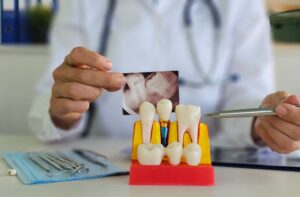
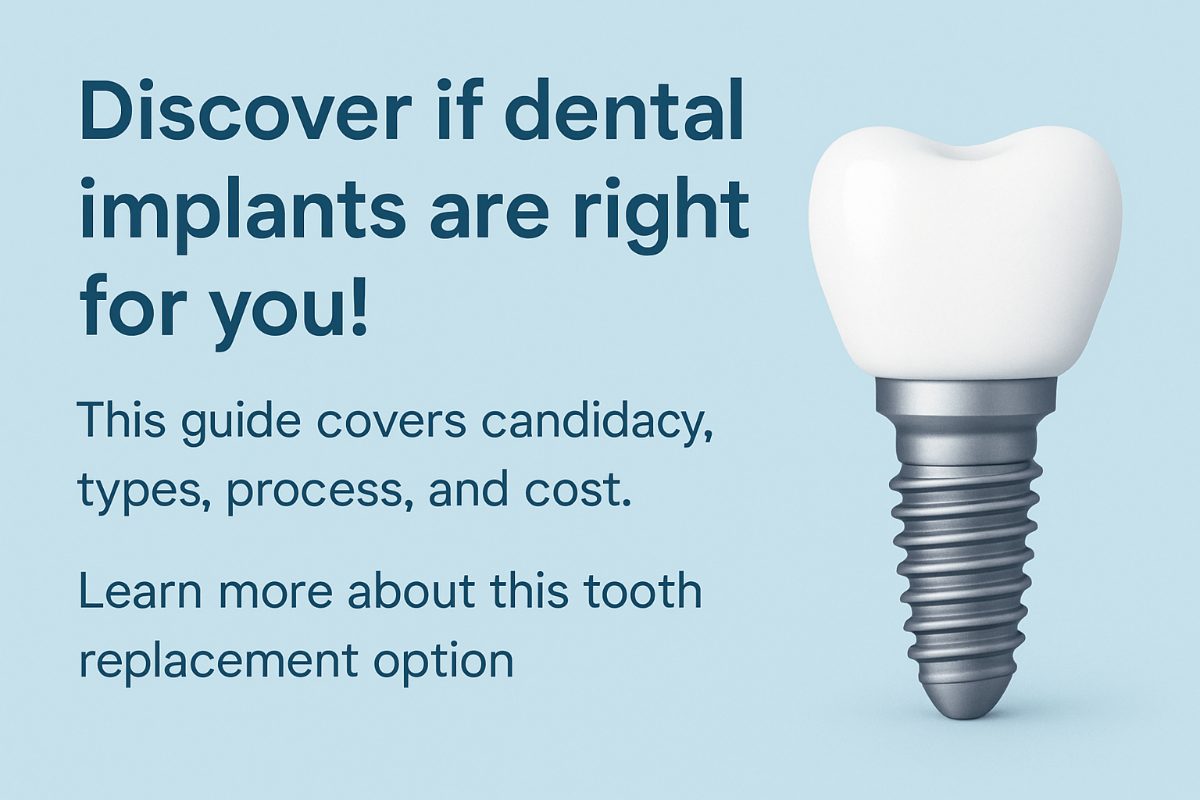
Dental implants — here called dent/i — are artificial tooth roots that hold replacement teeth. They can replace a single missing tooth, several adjacent teeth, or an entire arch. This guide explains who makes a good candidate for dent/i, the main types, the treatment steps, risks and benefits, typical costs and financing, and how Dr. Barrie Matthews and Big Sky Smile Center approach care.
Who is a Good Candidate for dent/i
You may need dent/i if you have one missing tooth, several gaps, or dentures that slip. Good candidates are healthy enough for minor oral surgery and want a long-term solution for chewing and appearance.
Health and bone factors
Successful dent/i needs enough jawbone and healthy gums. Smoking, uncontrolled diabetes, or severe gum disease can lower success. Older age alone isn’t a disqualifier if bone and health are managed.
When alternatives are better
Sometimes bridges or partial dentures are better short-term options — for example, when infection is present, bone is too thin and grafting isn’t possible, or a patient prefers less invasive care.
Types of dent/i Solutions
Dent/i solutions range from single-tooth implants to bridges supported by implants, up to full-arch restorations that replace most or all teeth.
Single implant and crown
A single dent/i replaces one tooth with a titanium root and a crown. With good care, these often last many years or decades.
Implant-supported bridge
When several adjacent teeth are missing, an implant-supported bridge uses fewer implants to hold multiple crowns. It avoids altering healthy neighboring teeth.
Full-arch (All-on-4 / hybrid prostheses)
Full-arch dent/i options like All-on-4 restore a full set of teeth on four or more implants. They offer faster function but can be more complex and costlier.
The dent/i Treatment Process: Step by Step
The process usually starts with a consult, imaging, implant placement, healing, then final restoration. Most patients complete treatment in a few months, though timelines vary.
Consultation and 3D imaging
CBCT scans and digital planning map bone, nerves, and sinuses. Careful planning improves placement accuracy and reduces complications.
Surgery, healing, and restoration
Implants are placed into the jaw, then heal as bone fuses to the implant (osseointegration). After healing, an abutment and final crown or prosthesis are attached.
Anesthesia and comfort options
Local anesthesia is standard. Many practices offer nitrous oxide, oral sedation, or IV sedation for comfort. Pain is usually manageable with short-term medication.
Risks, Benefits, and Longevity of dent/i
Dent/i success rates are high when placed and maintained properly. Risks include infection, implant failure, nerve injury, and sinus issues. Good oral hygiene and quitting smoking lower risks.
Long-term care and maintenance
Brush and floss around implants, get regular dental checkups, and treat gum disease early. Regular maintenance helps implants last decades.
Expected benefits
Dent/i restore chewing, improve speech, preserve jawbone, and boost confidence compared with removable dentures.
Cost and Financing Options for dent/i
Ways to pay
Insurance may cover parts of treatment. Many practices offer in-house plans, third-party financing options, or payment plans to spread cost.
Why Choose Dr. Barrie Matthews for dent/i
Dr. Barrie Matthews, DMD, a Montana native trained at the University of Pennsylvania, has advanced implant education (Full Arch Masters, Implant Pathway) and anesthesia training. At Big Sky Smile Center he blends high-level skill with gentle care and a community focus, serving Eastern Montana families with compassionate, modern implant dentistry.
Next Steps: Scheduling a dent/i Consultation
Bring medical and dental history and a list of medications to your first visit. The consult includes an exam, 3D imaging if needed, and a personalized dent/i plan. Contact Big Sky Smile Center to schedule a consultation and get a clear, individualized path to replace missing teeth with dent/i.