
Intro Choosing an implant can feel overwhelming. This article will walk you through the stages of a dental implant, typical timelines, what to expect at each step, common variations, and when to call for help. Read on to learn the basic process so you can feel prepared for appointments and discussions with your dentist.
A quick overview: What is a dental implant?
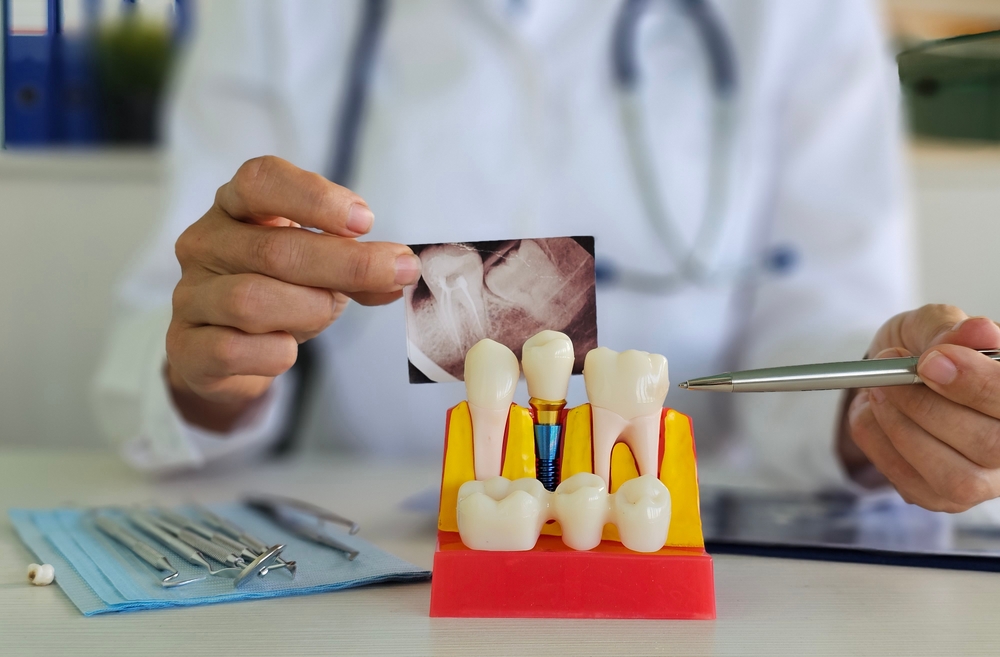
A dental implant is a small titanium post placed into the jaw to replace a tooth root. It supports a crown, bridge, or denture and acts like a natural tooth root to hold replacement teeth securely. Implants restore chewing, help preserve jawbone, and often last many years when cared for. Workflows differ — single-tooth implants, several implants for a bridge, or full-arch options — and those choices change some steps and timing.
Step-by-step implant process
1. Consultation & treatment planning
Your first visit includes an exam, X-rays or a CBCT scan, medical history review, and a discussion of goals. The dentist decides how many implants you need, whether extractions or grafts are required, and maps a timeline. Expect a treatment plan, informed consent, and a written cost estimate. Ask about sedation options and alternatives during this visit.
2. Pre-treatment: tooth extraction & site preparation (if needed)
If a damaged tooth must be removed, the dentist will extract it and may graft the socket to preserve bone. Healing can take weeks to months before placing an implant, though in some cases an implant can be placed immediately into the socket. Your dental team will explain whether immediate, delayed, or staged placement is best for your situation.
3. Bone grafting or sinus lift (if needed)
If there is not enough bone, a graft can build up the ridge. Grafts range from small particulate material to larger block grafts. For upper back teeth a sinus lift may be needed to create room for the implant. These procedures add healing time — often several months — but make implant placement safer and more predictable.
4. Implant placement surgery
The implant is placed into the jaw under local anesthesia and optional sedation. The surgery usually takes an hour or two depending on the number of implants. Afterward you may have swelling, mild pain, and soft-food restrictions for a few days. If appropriate, a temporary tooth may be attached the same day or shortly after.
5. Osseointegration: healing and monitoring
Osseointegration is when bone fuses to the implant surface. This critical healing phase commonly takes 2–6 months depending on bone quality and location. Your dentist will schedule follow-up visits to check healing, take X-rays, and confirm the implant is stable before moving to the next step.
6. Abutment placement & soft tissue shaping
Once the implant is secure, a small connector called an abutment or a healing cap is placed to shape the gum and allow proper fit of the final tooth. Sometimes this is done at the time of implant placement; other times it’s a separate minor procedure. The gums may need a few weeks to form the right shape for a natural-looking result.
7. Final restoration: crown, bridge, or denture
Your dentist will take impressions or digital scans and send them to the lab to make the final prosthetic. When the crown, bridge, or denture is ready, it is fitted, bite adjustments are made, and final checks ensure comfort and function. With good care, final restorations can last many years, though routine exams and cleanings are essential.
Typical timeline examples
A single tooth with good bone: 3–4 months from placement to final crown. If a bone graft is needed: 5–9+ months total to allow graft healing. Immediate-load cases can provide a same-day temporary tooth, but the final restoration usually follows after osseointegration. Timelines vary; your dentist will give a personalized schedule based on your case.
Things that change the stages or timeline
Common factors that affect timing: – Bone quality and quantity — poor bone means grafts and more healing time. – Smoking — slows healing and raises failure risk. – Uncontrolled diabetes — delays recovery and increases complications. – Medications (e.g., bisphosphonates) — can affect bone healing. – Need for extractions or sinus lifts — adds stages. – Implant approach — immediate vs. staged placement. Each factor can lengthen or change the order of steps.
What to expect for pain, recovery, and home care at each stage
After surgery expect mild-moderate pain for 48–72 hours, controlled with prescribed or over-the-counter pain medicine, ice packs, and soft foods. Keep the area clean with gentle rinses and careful brushing; use antibiotics or medicated rinses only as directed. During osseointegration, maintain good oral hygiene and avoid hard foods on the implant side. Report any unusual pain or swelling right away.
Risks, warning signs, and when to call your dentist
Contact your dentist if you have heavy or prolonged bleeding, increasing swelling after the first few days, fever, worsening pain rather than steady improvement, a loose implant, or pus/discharge. Early intervention often resolves issues. Keep emergency contact numbers handy after surgery.
Cost and insurance basics
Costs vary by complexity: extractions, grafts, number of implants, implant brand, and lab fees all affect price. Many dental plans offer partial coverage for parts of the process. Financing options and in-office care plans can help spread costs. Always get a written estimate during your consultation and ask about payment plans.
Why Big Sky Smile Center and Dr. Barrie Matthews for implants
Dr. Barrie Matthews, DMD, is a Montana native trained at the University of Pennsylvania with advanced implant and anesthesia education. He continues training through programs like Full Arch Masters and Implant Pathway to deliver up-to-date care. At Big Sky Smile Center, the focus is on predictable treatment and a calm, community-centered experience for patients in Eastern Montana.
How to get started: scheduling a consultation
To begin, book a consultation to review X-rays, discuss your specific needs, and get a personalized timeline and cost estimate. Ask about sedation, financing, and expected stages for your case. Call Big Sky Smile Center or request an appointment online to take the next step toward a stable, long-lasting tooth replacement.