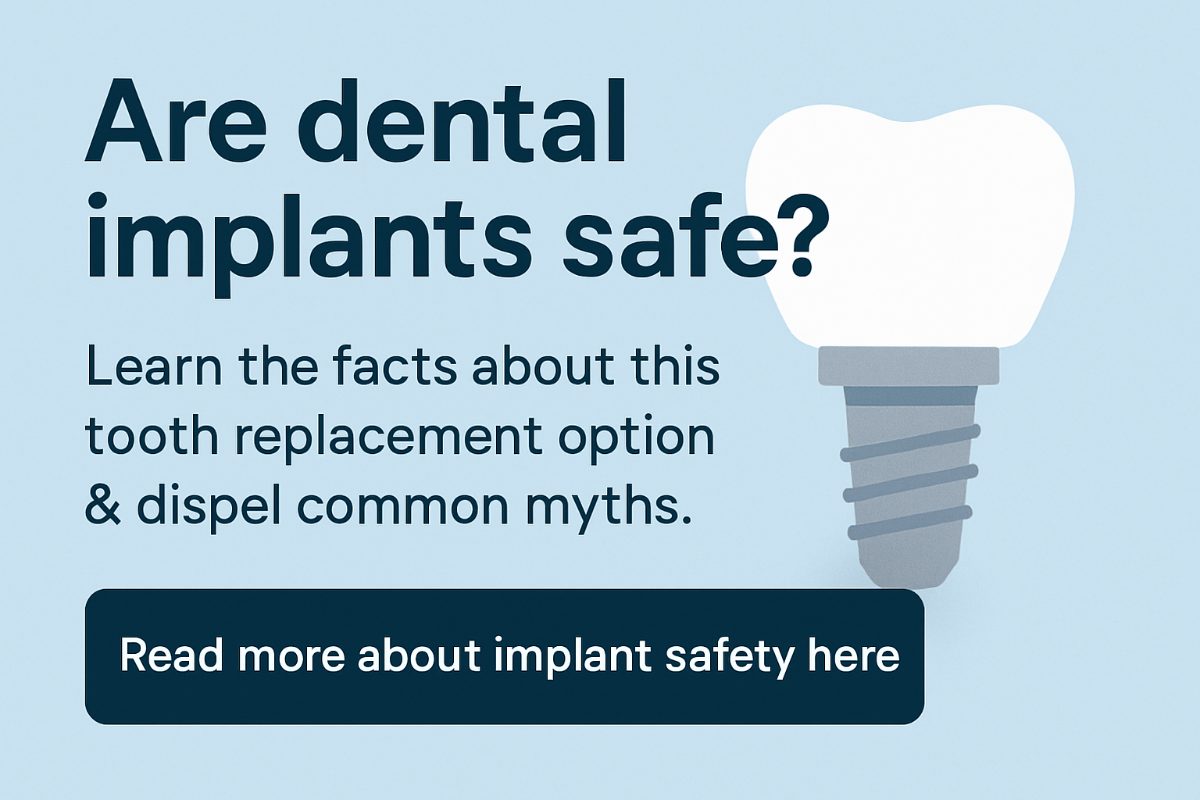
Are dental implants safe? That’s a common question, and this article will clear up myths and give simple facts so you can decide with confidence. A dental implant is a small titanium or ceramic post placed in the jaw that supports a replacement tooth (an abutment plus a crown). Implants are a common, long-term tooth replacement used by millions of people worldwide.
What a dental implant is and how it works
An implant system has three parts: the implant (the post in bone), the abutment (connector), and the crown (the visible tooth). After placement the bone grows around the implant in a process called osseointegration. That bond makes implants act and feel much like a natural tooth root, giving strong chewing force and stable fit for crowns, bridges, or full-arch prostheses.
Common myths about implants
Myth: Are dental implants safe? They are risky and experimental.
Myth: Implants are new and unsafe. Fact: Dental implants have decades of research and clinical use backing them. Modern implant techniques and materials have success rates well over 90% in many studies. They are a standard treatment, not an experiment.
Myth: Implants cause infections or make you sick
Myth: Implants will cause systemic illness. Fact: Infection risk exists with any surgery but is low when care is taken. Dentists use sterile technique, antibiotics when appropriate, and follow-up care to prevent and treat infections. Problems that do occur are usually treatable if caught early.
Myth: Only young, healthy people can get implants
Myth: Implants are only for young patients. Fact: Many older adults and people with controlled medical conditions are good candidates. Age alone is not a disqualifier; overall health, bone quality, and management of chronic issues matter more.
Key facts about safety
Proven success rates
Implants show high success rates—commonly 90%+ over many years. Success depends on factors like bone quality, oral hygiene, smoking, and systemic health. Careful planning and follow-up improve long-term outcomes.
Materials and biocompatibility
Titanium and zirconia (ceramic) are the usual implant materials. Both are highly biocompatible and bond with bone. Titanium has a long track record; zirconia is an option for patients with specific metal concerns.
Infection, rejection, and complications
Rejection like with organ transplants doesn’t occur because implants are inert. The most common long-term complication is peri-implantitis—gum inflammation around an implant. It can often be managed with cleaning, antibiotics, or minor surgery if caught early.
Anesthesia and sedation safety
Most implant work uses local anesthesia. Many practices offer oral or IV sedation for comfort. When provided by trained clinicians with proper monitoring, anesthesia-related risks are low. Discuss medical history and medications before the procedure.
Who is a good candidate and when implants may be less safe
Good candidates: non-smokers or willing to quit, healthy gums, adequate bone, and controlled chronic conditions. Risks rise with heavy smoking, uncontrolled diabetes, severe bone loss, active gum disease, or past radiation to the jaw. Special planning—bone grafts, staged treatment, or medical clearance—can reduce risks for many patients.
How to lower your risk
- Choose an experienced, implant-trained dentist or specialist.
- Insist on proper imaging (CBCT) and digital planning.
- Follow pre-op instructions and quit smoking ahead of surgery.
- Maintain excellent oral hygiene and attend follow-up visits.
- Get medical conditions under control (diabetes, blood pressure).
What to expect during recovery
Day of surgery: mild-to-moderate discomfort and swelling are normal and managed with pain medicine and cold packs. First 1–2 weeks: soft diet, gentle cleaning, and follow-up. Months: bone integration continues for 3–6 months before the final crown is placed. Seek prompt care for severe pain, fever, heavy bleeding, or signs of spreading infection.
Why consider Big Sky Smile Center for implants
Big Sky Smile Center focuses on careful planning and patient safety. Dr. Barrie Matthews, DMD, is a Montana native trained at the University of Pennsylvania with advanced implant and anesthesia training through programs like Full Arch Masters and Implant Pathway. The team emphasizes evidence-based care and a family-like experience for patients across Eastern Montana.
Quick FAQ
- Will insurance cover implants? Coverage varies—ask your insurance and our office for benefits and financing options.
- How long do implants last? With good care, implants can last decades and often a lifetime.
- Is the procedure painful? Most patients report manageable discomfort with modern anesthesia and sedation options.
If you’re still asking “are dental implants safe,” a personalized consult will answer how implants apply to your health and needs. Contact Big Sky Smile Center to schedule a safe, evidence-based evaluation and treatment plan.